
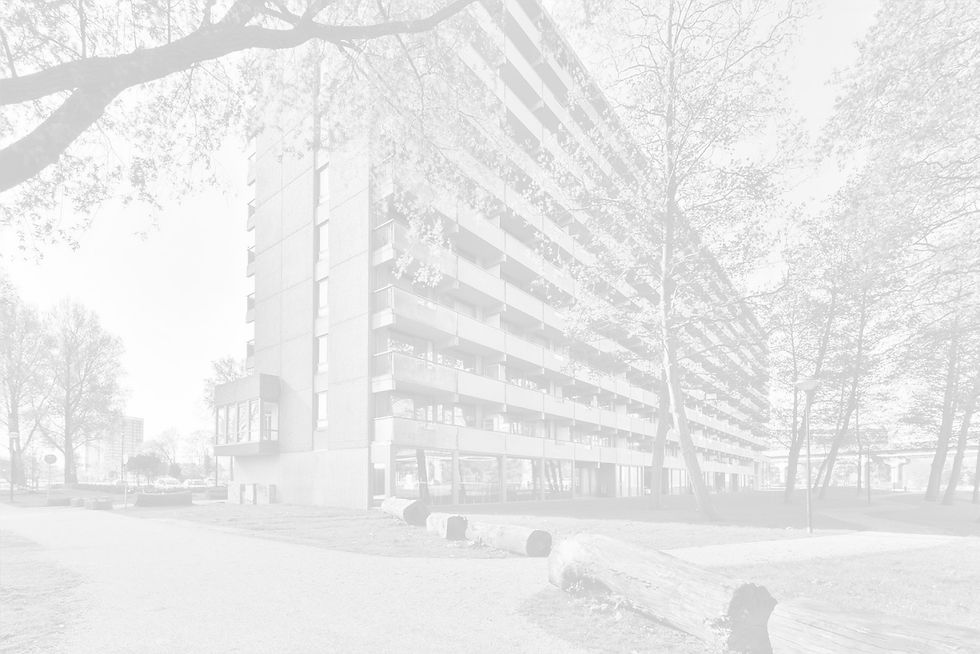
Our flat - protected cityscape Bijlmer Museum

Updated: Feb 7
Kleiburg is not only a large residential building but also part of the Bijlmer Museum, a municipally protected cityscape . This means that the cultural-historical value of the apartment building and its surroundings is protected. Exterior modifications, such as facades and window frames, are only permitted if they harmonize with the original character. This may have consequences for the sustainability improvements of phase 1: some measures require additional consultation and permits.
The flat

Kleiburg was built in the early 1970s. The name refers to an old farmhouse in the Bijlmermeer neighborhood. In the 1980s, the Bijlmer neighborhood fell into disrepair. After the Bijlmer disaster of 1992, a major renovation of the neighborhood began.

Housing association Rochdale wanted to demolish Kleiburg around 2008/2009, but local residents took action. The building was eventually sold to Consortium DeFlat for €1, on the condition that a sound renovation plan be developed.
The exterior renovation began in September 2013. The homes were sold as empty shells for fixer-uppers. Phase 1 was completed in February 2014. In 2017, Kleiburg received international recognition: the project won the prestigious Mies van der Rohe Award and a Dutch Design Award .
The protected cityscape
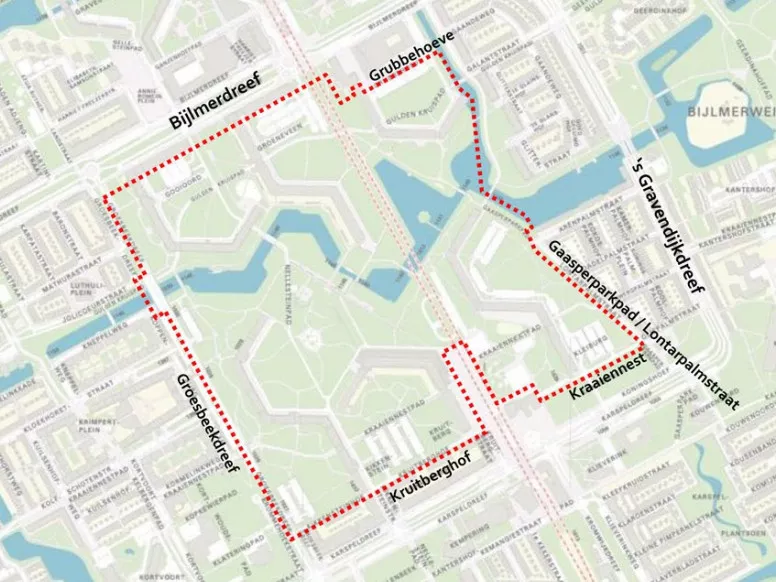
Since May 2019, the Bijlmer Museum has been designated a protected cityscape by the municipality of Amsterdam. Kleiburg is part of this, along with the Gooioord, Groeneveen, Grubbehoeve, Kikkenstein, and Kruitberg flats. The elevated metro line, the greenery, the water, and the bridges are also part of this designation.
The goal is to protect the cohesion and cultural-historical value. For Kleiburg, this means that the appearance cannot simply be altered.
Limitations and consequences
For Kleiburg phase 1, "protecting cohesion and cultural-historical value" may mean that we sometimes have to work together with phases 2, 3, and 4 on sustainability.
Consider this:
facades at the front and back;
windows and frames;
raising the roof for insulation.
Permits
In most cases, a permit is required for changes visible from the street or public space. Examples include:
replacement of windows and frames;
roof insulation on the outside;
applying facade insulation.
The municipality assesses whether changes are compatible with the character of the apartment building and the surrounding area. For advice, the homeowners' association can contact the Sustainable Heritage Desk (in Dutch: Loket Duurzaam Erfgoed) of the City of Amsterdam.
Next step
We will always indicate in the research results whether a measure might be restricted by the "protected cityscape" status. This way, it remains clear what is and isn't permitted.
Do you have any questions, ideas or would you like to share your experiences?
Email the committee at duurzaamkleiburg1@gmail.com. Together we'll chart a path toward a future-proof Kleiburg!

