
Research results: insulation | front and rear facades: window frames, glazing and air gaps

Bijgewerkt op: 4 feb
Table of contents of insulation


Current situation
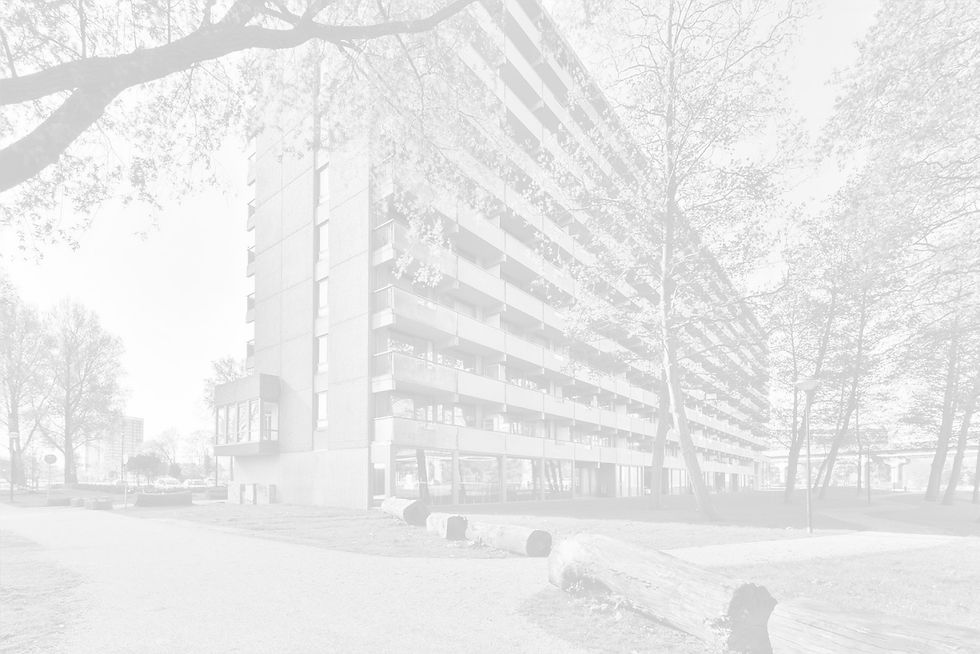
The front and rear facades consist largely of HR++ glass, set in hardwood frames.
The HR++ glass was installed in 2013.
The frames
According to Steeds Advies, the window frames are in poor condition. The basis for this opinion is unclear. Steeds did not inspect the window frames during the inspection.
Both the student teams from Utrecht University of Applied Sciences and the 2019 and 2024 MJOPs consider the condition of the window frames to be adequate.
It appears that a significant amount of heat is lost through the window frames and air gaps. It has also been observed that the connections to the ceiling, floor, and inner wall of the cavity wall ("inner cavity wall") leave much to be desired.
The glazing
The HR++ glass has a U-value of 1.1 and the frames have a U-value of 1.6. (See also Insulation - introduction).
The existing situation even meets the requirements of the Building Decree for new construction, which requires a maximum average Uw-value of 1.65 for all windows and doors combined.
with HR++ glass with a U-value of 1.1 and frames with a U-value of 1.6, the total U value, depending on the glass surface and frame dimensions, averages 1.3 to 1.5 W/m²K, which meets the standard for new construction.
HR++ glass typically provides good insulation for 25 to 30 years. After that, its insulation performance noticeably declines.
Other cold bridges
See Insulation - introduction for an explanation of thermal bridges.
the upstands (raised concrete edge from floor to frame);
the current ventilation grilles installed in the window frames (empty ventilation grilles); this is because an empty ventilation grille is an open flow channel without insulated walls or thermal breaks; therefore, heat is easily lost.

Opportunities for improvement
Opportunity for improvement for the window frames
The HU students also mention installing so-called ClickOvers over the window frames. This is not so much for better insulation, but mainly to avoid the costs of the necessary periodic painting.
ClickOvers?
ClickOver is a renovation system for windows and doors in which a new plastic frame is clicked over the existing wooden frame, without demolishing the old frame.
However, further study shows that after installation of the clickovers, the existing glazing no longer fits and therefore has to be replaced.

Improvement option for cracks and upstands
Since the building is located within a protected cityscape, interventions on the outside of the window frames are limited.
However, according to Steeds Advies, this problem can be solved indoors by applying seam and gap sealing to the existing window frames. are tackled effectively.
Outside, insulating the upstands will provide some improvement in the poor connection between the frame and the floor of the balcony and gallery. This will reduce drafts and cold airflow along the floor.
Because the insulation of the upstands forms a whole with the insulation of the balcony and gallery floors, this improvement opportunity is identified there further explained.
Opportunity for improvement in glazing
The HU team of full-time students suggests replacing the HR++ glass with triple glazing as an improvement. Triple glazing offers a (limited) improvement compared to the 10-year-old HR++ glass. Triple glazing reduces the total U-value from 1.4 to 1.0-1. See also Insulation - introduction.

Notes on glazing
triple glazing often does not fit in existing frames with HR++ glass due to its greater thickness;
with HR++ glass that is only 10 years old, the additional energy savings with triple glazing are usually too small to recoup the early replacement costs within the technical lifespan of glass and frames (25 to 30 years);
TNO is in the final phase of developing smart windows, also known as thermochromic windows, aimed at energy savings and climate-neutral living.
The windows automatically regulate solar heat: in summer they block heat, while in winter they let it in. This happens without the user having to do anything;
The thermochromic windows will initially be offered as new windows, but TNO is also working on retrofit solutions for existing buildings, for example as film for older glass .
Glazing: costs, subsidies and National Heat Fund
Costs: the costs of replacing HR++ glass with triple glazing are estimated by HU students (2024) at € 329,047.
Subsidy:
Subsidies for energy-saving measures, including the installation of triple-glazed windows, can be requested via the SVVE (for homeowners' associations).
The subsidy is €25 per m2; in our building that is €63,812.
Borrowing: the replacement of HR++ with triple glazing can be further financed by a loan from the National Heat Fund.
Read all about saving, borrowing and subsidies here.
Opportunity for improvement for the suskasten
Replace empty baffle boxes with insulated grilles. New insulated grilles effectively reduce thermal bridges and are ideal as replacements for empty baffle boxes in type C ventilation systems.
You can read more about this in the article Ventilation at Kleiburg;
ZR grilles have an average U-value between 2.6-3.0 and manual grilles (AK+ or flap models) have an average of 2.5-3.5; AK+ also offers additional sound insulation of up to 37-40 dB.
Want to read more about insulation?
Do you have any questions, ideas or would you like to share your experiences?
Email us at duurzaamkleiburg1@gmail.com . Together we'll chart a path toward a future-proof Kleiburg.